Is Your Fashion Store Ready for AI Shopping Agents?

What you will learn
- What you will learn
- What is an AI shopping agent?
- Why this matters for Shopify fashion brands now
- AI discovery begins with product data
- 1. Make product titles descriptive
- 2. Write descriptions that answer real shopping questions
- 3. Treat variants as products, not technical leftovers
- 4. Keep price, stock and policies consistent
- 5. Describe visual details that images alone cannot communicate
- 6. Build visible trust signals
- 7. Prepare for the click after the recommendation
- 8. Do not hand the entire customer relationship to the agent
- What not to do
- Publishing generic AI descriptions at scale
- Hiding essential information in images
- Treating structured data as a substitute for a good page
- Optimising for imaginary prompts
- Making claims your product cannot support
- A practical AI shopping readiness checklist
- The goal is not to write for robots
A shopper looking for a new jacket used to open Google, type a few keywords and work through a page of links.
Now, that same journey might begin with a much more specific request:
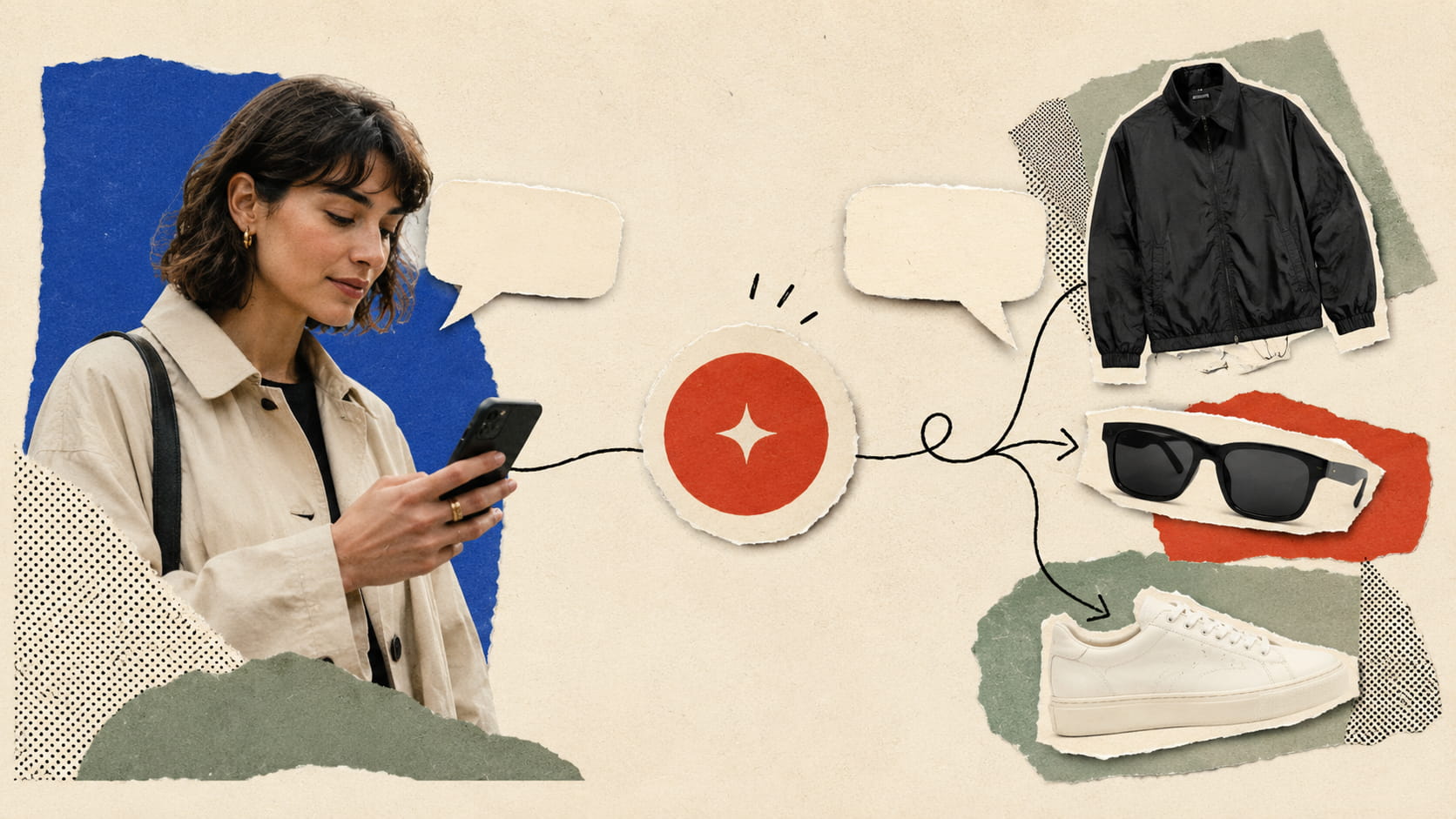
Find me a lightweight black jacket for a city break. I want something minimal, under €150, and easy to layer over a hoodie.
Instead of showing hundreds of loosely related results, an AI shopping assistant can interpret the request, compare products and return a shortlist. The shopper can then refine it further: “Nothing cropped,” “show me European brands,” or “which option has the easiest return policy?”
This is the beginning of agentic commerce – a shopping model in which AI systems help customers discover, evaluate and, in some cases, purchase products through a conversation.
For fashion brands, this creates a new acquisition channel. It also creates a new problem: if an AI system cannot clearly understand what you sell, who it is for and why it matches a shopper’s request, your product may never make the shortlist.
The good news is that preparing for AI shopping does not require rebuilding your entire store. It starts with better product information, clearer merchandising and a product-page experience that helps customers make a confident decision once they arrive.
What you will learn
- What an AI shopping agent is
- Why agentic commerce matters for fashion brands
- How to make your product catalogue easier for AI systems to understand
- How to prepare the product page for AI-referred shoppers
- Which common optimisation shortcuts to avoid
- How to audit your store with a practical checklist
What is an AI shopping agent?
An AI shopping agent is a system that helps a customer complete part of the shopping journey. Depending on the platform and the request, it may:
- Interpret a detailed or conversational shopping request
- Search products across multiple merchants
- Compare price, colour, material, size, availability and other attributes
- Summarise reviews or product differences
- Recommend a small number of relevant options
- Monitor availability or price changes
- Help the shopper proceed to checkout
This is different from a traditional search engine. Search usually gives the customer a set of links and leaves most of the evaluation to them. An AI agent can do more of that evaluation before the customer reaches a store.
It is also different from a basic chatbot added to a website. A store chatbot normally works with one merchant’s catalogue. An external shopping agent may compare products from many brands and decide which ones deserve to be presented.
That distinction matters. In traditional ecommerce, brands compete for the click. In agentic commerce, they may first need to compete for the recommendation.
Why this matters for Shopify fashion brands now
AI-driven shopping is no longer only a future concept. Shopify has introduced Agentic Storefronts, which can make eligible merchants’ products available through AI channels such as ChatGPT, Microsoft Copilot, Google AI Mode and Gemini. According to Shopify’s 2026 overview of agentic commerce, AI-driven traffic to Shopify stores grew eightfold year over year in the first quarter of 2026, while orders attributed to AI-powered searches grew nearly thirteenfold.
The exact scale and speed of adoption will vary by market, platform and product category. Customers are not going to stop using Google, social media, marketplaces or brand websites overnight. AI shopping is better understood as an additional discovery layer – not an immediate replacement for every existing channel.
Fashion is especially relevant to this shift because its shopping requests are rarely defined by one keyword. A customer may care about a combination of:
- Style and occasion
- Colour and pattern
- Material and texture
- Fit and silhouette
- Budget
- Size availability
- Delivery timing
- Return conditions
- Personal preferences
These are precisely the kinds of multi-part requests that conversational systems are designed to interpret. But an AI agent can only work with the information it can access and understand.
AI discovery begins with product data
Your storefront may look beautiful to a person while remaining unclear to a machine.
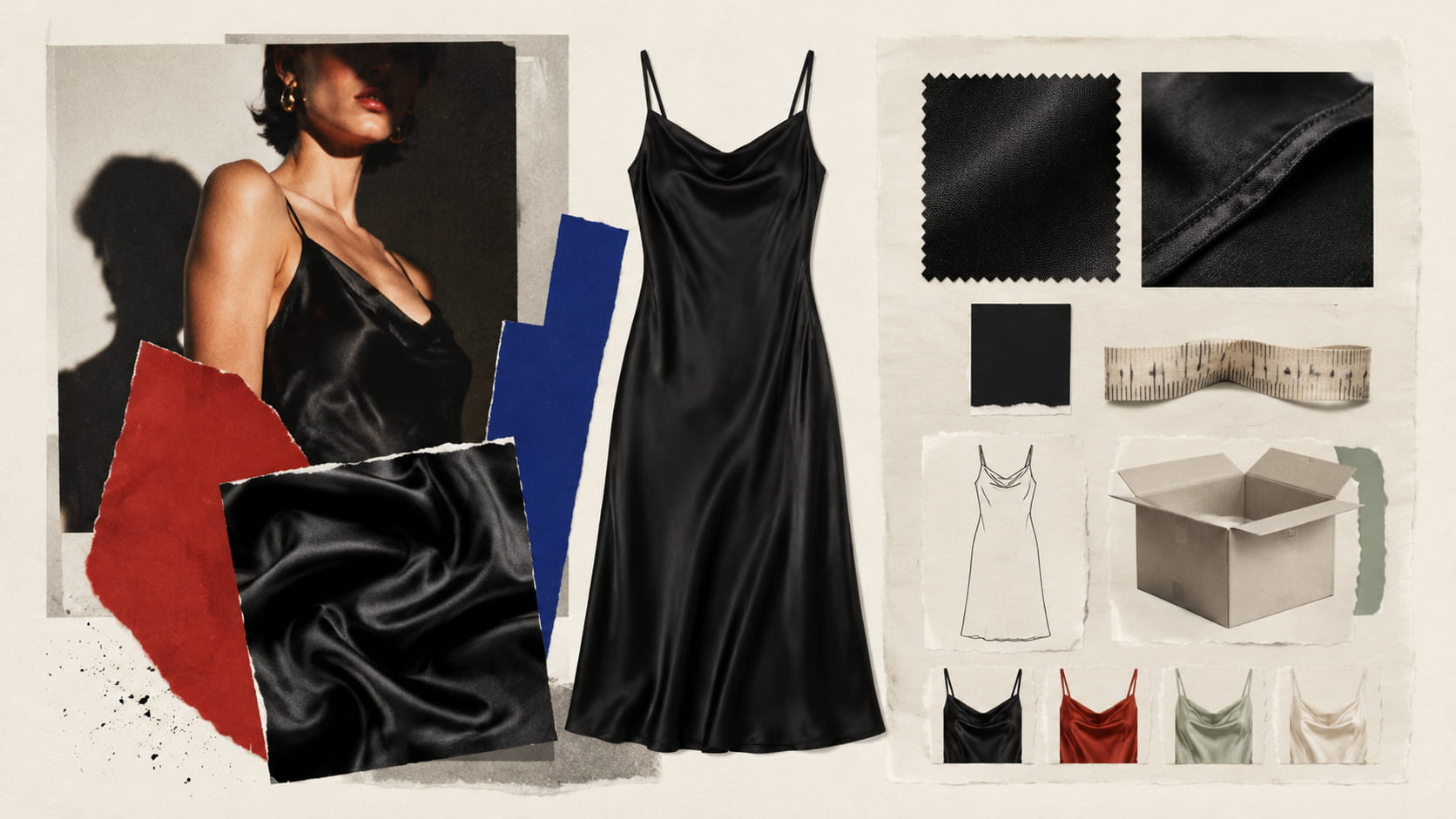
A campaign name such as Midnight in Paris might be memorable, but it does not tell a shopping system whether the product is a black satin midi dress, a navy oversized blazer or a fragrance. The creative name can stay, but it needs to be supported by explicit product information.
Shopify’s infrastructure for agentic commerce is built around structured catalogue data. Google makes the same basic point in its Merchant Center product data guidance: accurate titles, descriptions, identifiers, images, pricing, availability and variant attributes help its systems match products with relevant queries and experiences.
Think of every product as needing two layers:
- The brand layer: the voice, story and creative presentation that make the item desirable.
- The information layer: the precise attributes that allow search engines, sales channels and AI systems to understand it.
You need both. Removing personality turns the page into a database entry. Removing detail makes the product difficult to retrieve accurately.
1. Make product titles descriptive
A useful product title identifies the item before it tries to sell it.
Compare these two examples:
| Weak title | More useful title |
|---|---|
| The Sofia | Sofia Gold-Plated Chunky Hoop Earrings |
| After Dark | After Dark Black Satin Midi Dress |
| Essential 02 | Women’s Oversized Organic Cotton T-Shirt |
The stronger versions preserve the product or collection name while adding attributes that a shopper might actually request.
Where relevant, include the product type, audience, colour, material and a defining characteristic. Do not force every possible keyword into the title. Keyword-stuffed titles are difficult for people to scan and can make a premium brand feel like a marketplace listing.
The goal is clarity, not maximum length.
2. Write descriptions that answer real shopping questions
Many fashion product descriptions say a great deal without communicating much.
Phrases such as “designed for unforgettable moments” or “your new everyday essential” can support the brand voice, but they do not answer practical questions. An effective description should also explain:
- What exactly is the product?
- What is it made from?
- How does it fit?
- What does the material feel like?
- Is it lightweight, structured, stretchy or oversized?
- What occasion or use is it suitable for?
- Are there important care instructions?
- What is included in the purchase?
For a pair of sunglasses, describe the frame shape, lens colour, material, dimensions and protection. For a necklace, include the chain length, pendant dimensions, plating and closure. For apparel, include the silhouette, fabric composition, stretch, model sizing and fit guidance.
Write for the customer first. Clear natural language is also easier for AI systems to interpret than vague slogans or blocks of repeated SEO phrases.
3. Treat variants as products, not technical leftovers
Colour, size and material variants often contain some of the most important information in fashion ecommerce. They are also a common source of catalogue errors.
Check that:
- Every variant has a stable SKU or product identifier
- Colours use meaningful names that can be understood outside your brand
- Sizes are mapped consistently
- Variant images show the correct colour or finish
- Price and availability update correctly
- Out-of-stock options are clearly represented
- Related variants are grouped under the correct parent product
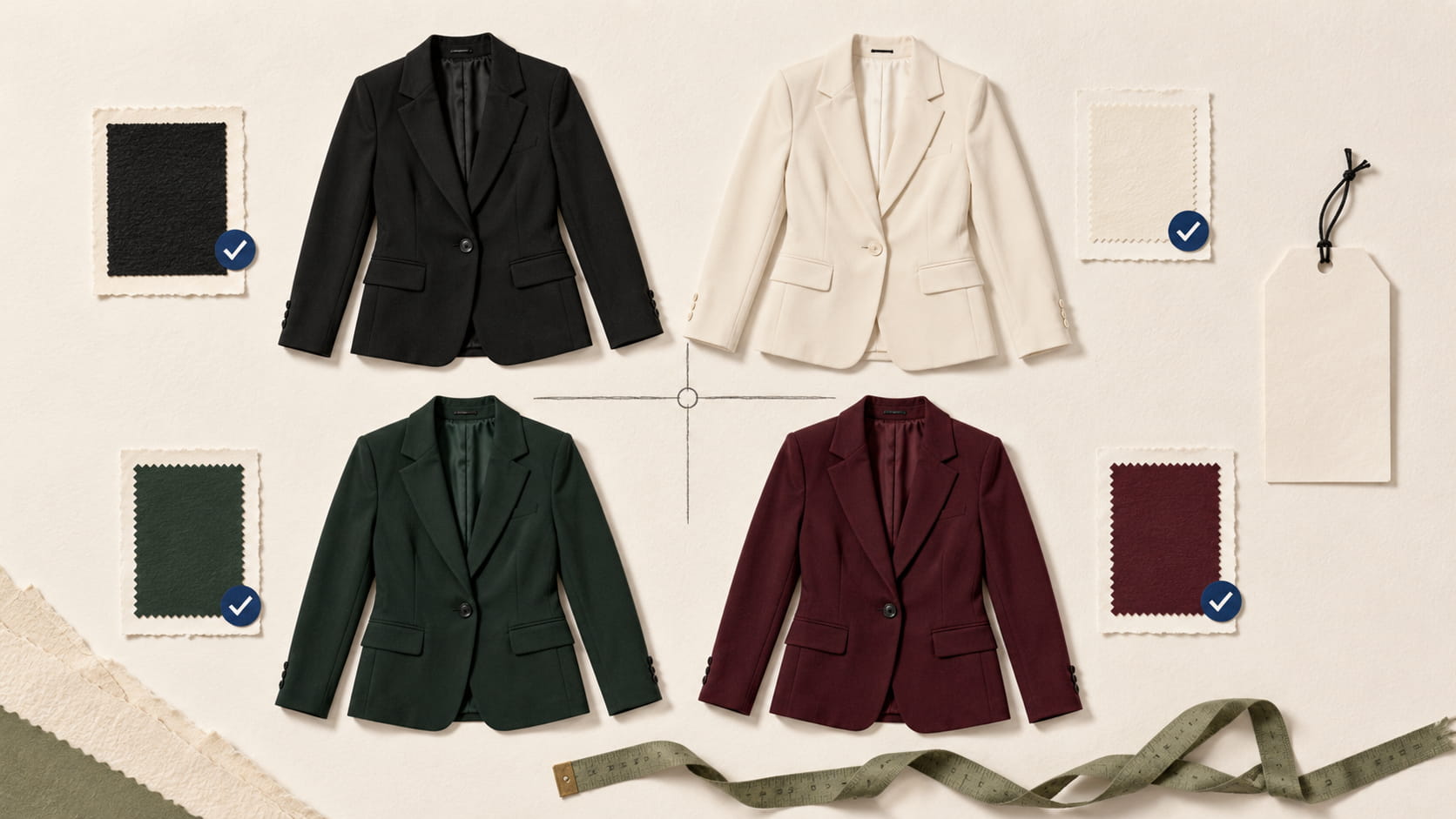
You can still use branded colour names such as “Forest Mist” or “Oat Milk.” Add a standard colour reference – green or beige, for example – where your catalogue setup allows it. A shopper is much more likely to ask for a “beige linen shirt” than an “Oat Milk shirt.”
Google’s documentation for product variant structured data explains how product groups, unique identifiers and variant attributes help systems understand that several options belong to the same core product.
4. Keep price, stock and policies consistent
An AI recommendation becomes unreliable when the information behind it is outdated.
Imagine an assistant recommends a dress under €100, but the landing page shows €129. Or it says a medium is available when the variant is sold out. Even if the inconsistency comes from a delayed feed rather than deliberate deception, the customer experiences it as broken trust.
Audit the consistency between your:
- Shopify product data
- Storefront content
- Structured data
- Google Merchant Center feed
- Regional pricing
- Inventory status
- Shipping and return information
Avoid manually repeating dynamic information in multiple places when it can be pulled from one reliable source. The more disconnected copies you maintain, the more opportunities there are for them to disagree.
5. Describe visual details that images alone cannot communicate
Fashion is visual, but images are not a substitute for product information.
A strong catalogue describes details such as shape, pattern, texture, finish and proportions in words. This helps a system distinguish between products that might otherwise look similar in a feed.
Instead of:
A statement piece for every occasion.
Try:
A slim, gold-plated stainless-steel bangle with a polished finish and an open cuff design. The minimal profile makes it suitable for wearing alone or stacking with other bracelets.
The second description is still readable, but it gives both the shopper and the retrieval system something concrete to work with.
Images should also be accurate, high-resolution and linked to the correct variants. Use a clear primary image, then add secondary images for scale, texture, movement, different angles and on-person context. The primary image helps the product travel across shopping surfaces; the additional content helps the customer evaluate it.
6. Build visible trust signals
AI can help a shopper narrow the field, but the shopper still needs a reason to trust the merchant.
Make the following information easy to find and understand:
- Delivery costs and expected timing
- Return window and conditions
- Duties or cross-border fees
- Material and care details
- Authentic customer reviews
- Contact information
- Payment options
- Warranty or product guarantees, where applicable
Do not hide important conditions inside a long policy page. A short summary near the purchase area can answer the immediate question, while a link provides the full details.
Trust also depends on consistency. If your product page, FAQ and return policy give different answers, neither a customer nor an AI assistant can know which one is correct.
7. Prepare for the click after the recommendation
Being recommended is not the same as making a sale.
An AI agent may do an excellent job of finding a relevant product, but the final decision can still collapse on the product page. This is particularly true in fashion, where objective attributes only answer part of the question.
The agent may confirm that a pair of glasses is black, rectangular, within budget and available for delivery. It cannot automatically remove the shopper’s final hesitation:
Will these actually suit me?
Once the customer arrives, the product page should help them move from relevance to confidence. That can include:
- Clear product photography
- Video or movement
- Fit and sizing guidance
- Reviews with useful context
- Product comparison
- Styling suggestions
- AI virtual try-on
Tryvio adds AI virtual try-on directly to Shopify product pages, allowing shoppers to upload a photo and see a realistic visualisation of the product on themselves. It is not a replacement for accurate measurements or sizing information. It addresses a different part of the decision: helping the shopper picture the outcome before buying. For a deeper look at where that hesitation comes from, read our guide to why fashion shoppers abandon product pages.

This distinction will become more important as AI discovery improves. Agents may send brands fewer casual visitors and more shoppers with a specific, pre-qualified need. Product pages must be ready to convert that intent rather than repeat generic information the shopper has already received.
8. Do not hand the entire customer relationship to the agent
AI channels can introduce your brand to customers who might not otherwise find it. However, discovery through a third-party assistant can also reduce the amount of first-party context you receive.
If the entire journey happens elsewhere, the customer may remember the assistant more clearly than the store. The brand also has fewer opportunities to learn from browsing behaviour, build an email relationship or encourage a second purchase.
That does not mean brands should avoid AI shopping channels. It means the onsite experience still matters.
Give customers a reason to engage directly after they arrive:
- Offer useful product education
- Make account creation optional and worthwhile
- Capture email with a relevant value exchange
- Let shoppers save, compare or try products
- Provide post-purchase support that feels distinctly yours
- Build retention flows around meaningful customer actions
The agent may open the door. The brand experience still determines whether the relationship continues. Try-on engagement can also become part of that ongoing relationship – for example, through a personalised Tryvio and Klaviyo follow-up when an interested shopper leaves without purchasing.
What not to do
Preparing for AI shopping is not a licence to fill your store with machine-written content.
Avoid these shortcuts:
Publishing generic AI descriptions at scale
If every product is “elevated,” “timeless” and “perfect for any occasion,” you have created more text without adding more information. Use AI to support drafting or data cleanup if it helps, but review the result against the actual product.
Hiding essential information in images
Size charts, material details and delivery conditions should not exist only as image text. Important information needs to be available in accessible page content and the appropriate product fields.
Treating structured data as a substitute for a good page
Structured data helps machines interpret information. It does not persuade a human to trust an unfamiliar brand or make an uncertain fashion purchase.
Optimising for imaginary prompts
Do not create dozens of awkward sentences to match every possible conversational query. Build a complete, accurate product record and write clear copy. The system’s job is to interpret the shopper’s language – not yours to predict every phrase.
Making claims your product cannot support
An AI system can repeat inaccurate claims just as easily as accurate ones. Be precise about materials, sustainability, origin, fit and performance. Trust lost through a bad recommendation is difficult to recover.
A practical AI shopping readiness checklist
Use this checklist to review your Shopify store:
- Product titles clearly identify what each item is
- Descriptions include material, fit, colour, shape and intended use where relevant
- Every variant has accurate images, pricing, availability and identifiers
- Product categories and attributes are complete and consistent
- Structured product data is valid
- Google Merchant Center has no unresolved catalogue issues
- Shipping, returns and delivery information are easy to find
- Product reviews provide genuine decision-making context
- Mobile product pages load quickly and remain easy to use
- Customers can evaluate fit, scale or appearance before purchasing
- Analytics distinguish AI-referred traffic where possible
- The store has a plan for turning new visitors into direct customer relationships
You do not need to complete everything in one project. Start with your bestselling products and the catalogue issues that affect accuracy: missing attributes, incorrect variants, inconsistent availability and unclear descriptions. These improvements support AI discovery, but they also improve paid shopping feeds, organic search and the customer experience today.
The goal is not to write for robots
The rise of AI shopping agents may sound like another technical optimisation problem. At its core, it rewards something much simpler: merchants that describe their products clearly and help people make better decisions.
Fashion brands should not strip away their creative identity to become machine-readable. The strongest product experience combines emotional appeal with accurate information. It gives an AI system enough structure to identify the product and gives the shopper enough confidence to choose it.
AI agents may increasingly decide which products enter the consideration set. They will not eliminate the need for a strong storefront. If anything, they make the final experience more important. When a highly relevant shopper arrives, your product page has to answer the question the agent cannot fully resolve:
Is this right for me?
That is where detailed product content, credible proof and interactive experiences work together and where AI discovery can turn into a real customer relationship.
Frequently asked questions
What is agentic commerce?
Agentic commerce is a model in which AI agents assist with parts of the shopping journey, such as product discovery, comparison, recommendations and checkout. Instead of manually reviewing many pages, a customer can describe what they need and ask the agent to narrow the options.
Can Shopify products appear in AI shopping results?
[Shopify’s Agentic Storefronts](https://help.shopify.com/en/manual/online-sales-channels/agentic-storefronts) can make products from eligible stores available through supported AI channels. Merchants should review the **Agentic** section of their Shopify admin to see the channels and settings currently available to their store and market.
Is AI shopping optimisation the same as SEO?
They overlap, but they are not identical. Both benefit from crawlable pages, clear language, structured data and strong product information. AI shopping also depends heavily on complete catalogue attributes, live pricing, availability and the system’s ability to match a product to a detailed conversational request.
Do fashion brands need to rewrite every product description?
Not necessarily. Start by identifying what is missing. If the existing copy clearly communicates the product type, material, colour, fit, dimensions and other relevant attributes, it may only need small improvements. Prioritise bestselling products and descriptions built mainly from vague campaign language.
Where does virtual try-on fit into AI shopping?
An AI shopping agent can help a customer find a product that matches stated preferences. Virtual try-on supports the next step by helping the shopper visualise that product on themselves. It should complement – not replace – accurate product photography, dimensions, sizing and fit guidance.

Related posts



Tryvio adds AI virtual try-on to your Shopify product pages — installed in minutes, measured on your dashboard.
Install Tryvio →